
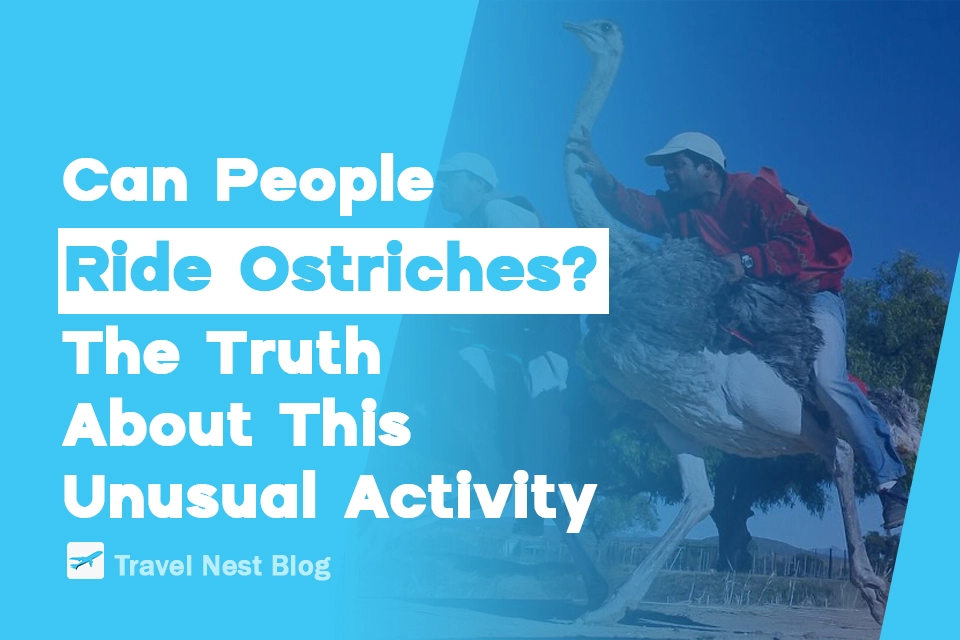
Ostriches are huge birds with long legs and impressive running abilities. Because of their size, many people wonder whether they can carry a person on their back. So, can people ride ostriches? It has happened at some farms and tourist attractions, but that doesn’t mean it’s safe for the rider or the bird.
- Can People Ride Ostriches in Real Life?
- Why Aren’t Ostriches Suitable for Riding?
- How Fast Can an Ostrich Run?
- Where Can You See Ostriches During Your Travels?
- Is Ostrich Riding Safe for Humans?
- Can Ostriches Carry the Same Weight as Horses?
- What Should You Know Before Visiting an Ostrich Farm?
- Conclusion
- FAQs
If you’re curious about ostriches or planning to visit a wildlife attraction, there are a few things worth knowing before considering an activity like this.
Can People Ride Ostriches in Real Life?
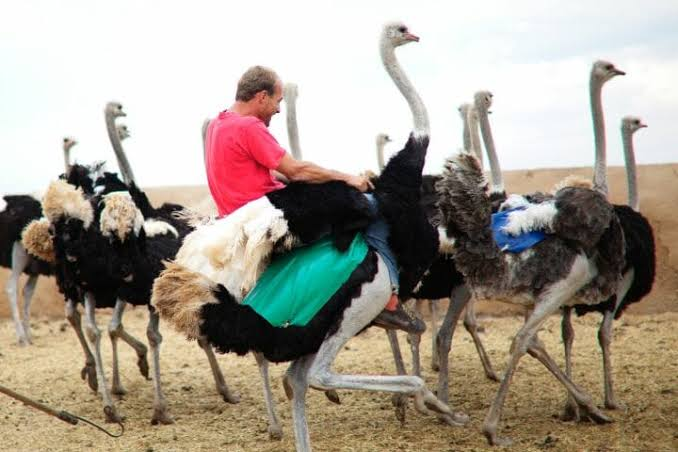
Yes, people have ridden ostriches at certain farms and tourist attractions, particularly in South Africa. However, ostriches aren’t domesticated riding animals like horses. Their bodies are adapted for running, and carrying a person isn’t a natural activity for them.
The San Diego Zoo’s ostrich profile explains how these birds use their powerful legs to move across open ground. Their size and strength may look impressive, but those features don’t automatically make them suitable for riding.
Why Aren’t Ostriches Suitable for Riding?
Ostriches are the largest living birds, but their bodies work differently from those of traditional riding animals. Their long legs and strong muscles help them run quickly rather than carry additional weight.
Their Bodies Are Built for Running
Ostriches can cover long distances at speed. Adding a rider places extra weight on a body that isn’t naturally designed for that purpose. Even if an individual bird appears strong enough, that doesn’t mean the activity is appropriate.
They May Become Stressed
Ostriches are wild animals, even when raised on farms. Being restrained, approached by crowds, or handled in unfamiliar ways may cause stress. Responsible wildlife experiences should allow animals enough space to move away from people.
They Can Injure People
An ostrich can kick forcefully if it feels threatened. Its powerful legs and large claws can cause serious injuries, so visitors should never try to mount, chase, or provoke one.
How Fast Can an Ostrich Run?
Ostriches are among the fastest-running birds in the world. They can reach speeds of around 70 kilometres per hour under suitable conditions, although speed varies depending on the bird and the circumstances.
Their long strides help them travel efficiently across open land. Since ostriches rely on their legs to escape danger, chasing them for entertainment can cause unnecessary stress.
If you see ostriches during a wildlife visit, observe them from a safe distance and follow the instructions of trained animal-care staff.
Where Can You See Ostriches During Your Travels?
You don’t need to ride an ostrich to see one up close. Wildlife parks, zoos, and responsibly managed ostrich farms may offer opportunities to learn about these birds and their behaviour.
South Africa
South Africa has a well-established ostrich-farming industry, particularly around Oudtshoorn in the Western Cape. Visitors can find ostrich-related attractions in the area, although the activities and animal-handling policies vary between facilities.
Before booking a visit, check how the animals are treated and whether the attraction allows them to behave naturally. If an activity involves riding or restraining a bird, consider choosing a different experience.
Wildlife Parks and Zoos
Some zoos and wildlife parks keep ostriches as part of their animal collections. These visits can help you learn about their habitat, diet, behaviour, and physical characteristics without putting unnecessary pressure on the animals.
The Smithsonian’s National Zoo provides information about wildlife and animal care. Check its current animal listings before planning a visit specifically to see ostriches.
If you’re interested in unusual outdoor experiences while travelling, this guide to travel adventures beyond the ordinary offers more inspiration for planning a trip around memorable activities.
Is Ostrich Riding Safe for Humans?
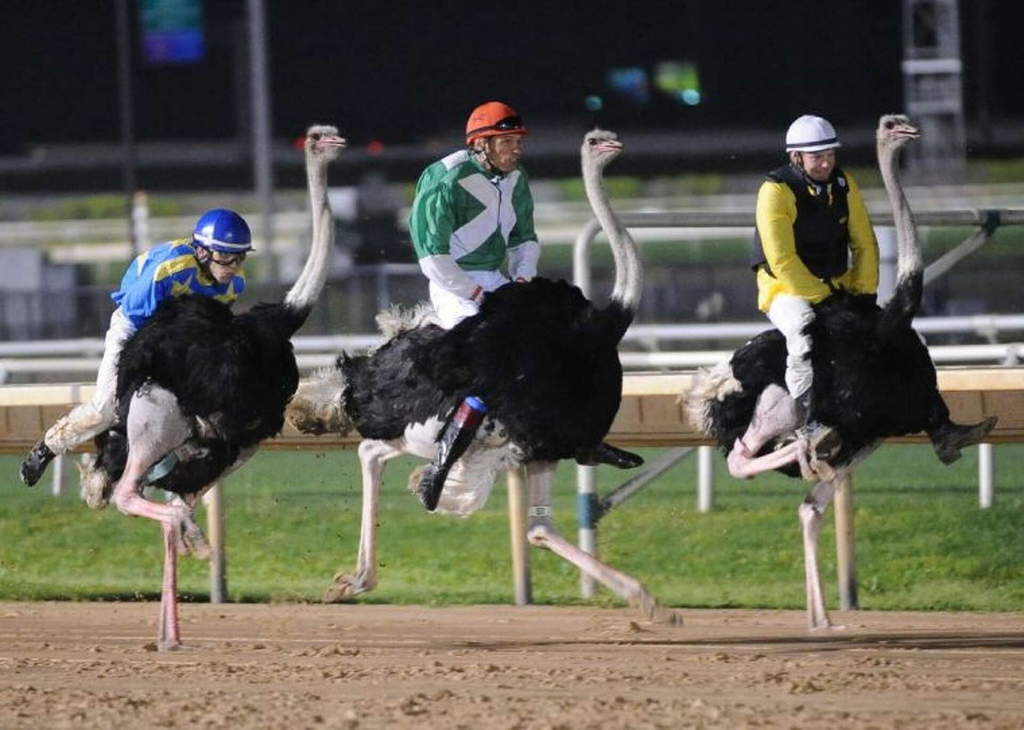
Ostrich riding carries risks because these birds are powerful and can react defensively when they feel threatened. A person could fall, and the bird could be injured or stressed by the extra weight and handling.
There are also animal-welfare concerns. An activity may be advertised as a tourist attraction, but that doesn’t automatically mean it is suitable for the animal.
Before visiting any wildlife attraction, ask how the animals are handled, whether they can move away from visitors, and what measures are used to protect both animals and people. The World Animal Protection website offers information about responsible wildlife tourism and animal welfare.
Can Ostriches Carry the Same Weight as Horses?
Ostriches and horses have very different bodies. Horses have been domesticated over thousands of years and are commonly trained to carry riders. Their equipment, training, and veterinary care can be tailored to that purpose.
Ostriches have a different skeletal structure and are built for running on two legs. There isn’t a reliable universal rider-weight limit that makes ostrich riding safe or appropriate.
Even if someone has successfully ridden an ostrich in the past, that doesn’t prove the activity is harmless. Watching these birds move naturally is a better way to appreciate their size and abilities.
What Should You Know Before Visiting an Ostrich Farm?
If you plan to visit an ostrich farm, check the visitor policies before arriving. Some facilities focus on education and observation, while others offer closer interactions.
- Maintain a safe distance unless staff specifically direct otherwise.
- Don’t feed ostriches unless the facility permits it and provides instructions.
- Avoid chasing, cornering, or touching birds without supervision.
- Choose attractions that prioritise animal welfare.
- Follow staff instructions and keep children close to you.
Planning ahead can make a wildlife visit more enjoyable without encouraging activities that put animals at risk.
Conclusion
So, can people ride ostriches? Yes, it has happened at some farms and tourist attractions, but ostriches aren’t naturally suited to carrying human riders. Their powerful legs can injure people, and riding may cause unnecessary stress or harm to the birds.
If you want to see ostriches during your travels, choose a responsible wildlife facility that focuses on observation and education. You can still appreciate their unusual size, speed, and behaviour without riding them.
FAQs
1. Can people ride ostriches like horses?
People have ridden ostriches in some settings, but ostriches aren’t domesticated riding animals like horses. The practice raises safety and animal-welfare concerns.
2. How much weight can an ostrich carry?
There is no reliable universal rider-weight limit that makes ostrich riding safe. Their bodies are built for running rather than carrying people.
3. Are ostriches dangerous to humans?
They can be dangerous if they feel threatened. Ostriches have powerful kicks that can cause serious injuries, so visitors should keep a safe distance and follow staff instructions.
