

The best time to visit Seychelles is generally April, May, October, or November. These months fall between the island nation’s two main wind seasons, bringing periods of lighter winds and more comfortable conditions for swimming, snorkeling, and exploring the islands.
- April and May: Great Months for Beaches and Snorkeling
- June to September: Drier Weather and Outdoor Adventures
- October and November: Ideal for a Relaxed Island Holiday
- December to March: Warm, Humid, and Greener
- Best Month to Visit Seychelles for Different Activities
- What Is the Cheapest Time to Visit Seychelles?
- How Long Should You Stay in Seychelles?
- What to Pack for Seychelles
- Conclusion
- FAQs
Seychelles isn’t a destination that depends on a short summer season. Temperatures remain warm throughout the year, but wind direction, rainfall, and sea conditions can change the kind of holiday you’ll enjoy. A beach that feels sheltered one month may be windier or affected by seaweed during another.
For a first visit, April and October are particularly appealing if you want calmer conditions for time on the water. May and November are also worth considering, depending on your plans and travel budget. The official Seychelles tourism website provides useful information for planning a trip around the seasons.
April and May: Great Months for Beaches and Snorkeling
April is one of the most comfortable months for enjoying Seychelles outdoors. The stronger winds between the main seasons tend to ease, creating better opportunities for boat trips, swimming, and exploring the coastline. It can be hot and humid, so early mornings are often a pleasant time for walking or sightseeing.
May brings drier weather and the beginning of the southeast trade winds. The breeze can make the heat feel less intense, although exposed beaches may become windier as the month progresses.
These months work well if your itinerary includes Mahé, Praslin, and La Digue. You can spend a few days exploring Mahé’s green hills, visit Praslin’s famous Vallée de Mai nature reserve, and take a ferry to La Digue for a slower island experience.
If snorkeling is high on your list, April and May are useful months to consider because the transition between wind seasons can produce favorable sea conditions. However, visibility and water conditions still vary, so check local advice before booking boat excursions.

June to September: Drier Weather and Outdoor Adventures
June through September is generally the cooler, drier part of the year. Rainfall tends to be lower, and the southeast trade winds become more established. This can make the weather pleasant for hiking, although stronger winds and rougher seas may affect some coastal activities.
On Mahé, you could spend a morning hiking through Morne Seychellois National Park before heading to a sheltered beach in the afternoon. The cooler conditions are also useful for travelers who prefer walking and exploring instead of spending every day beside a swimming pool.
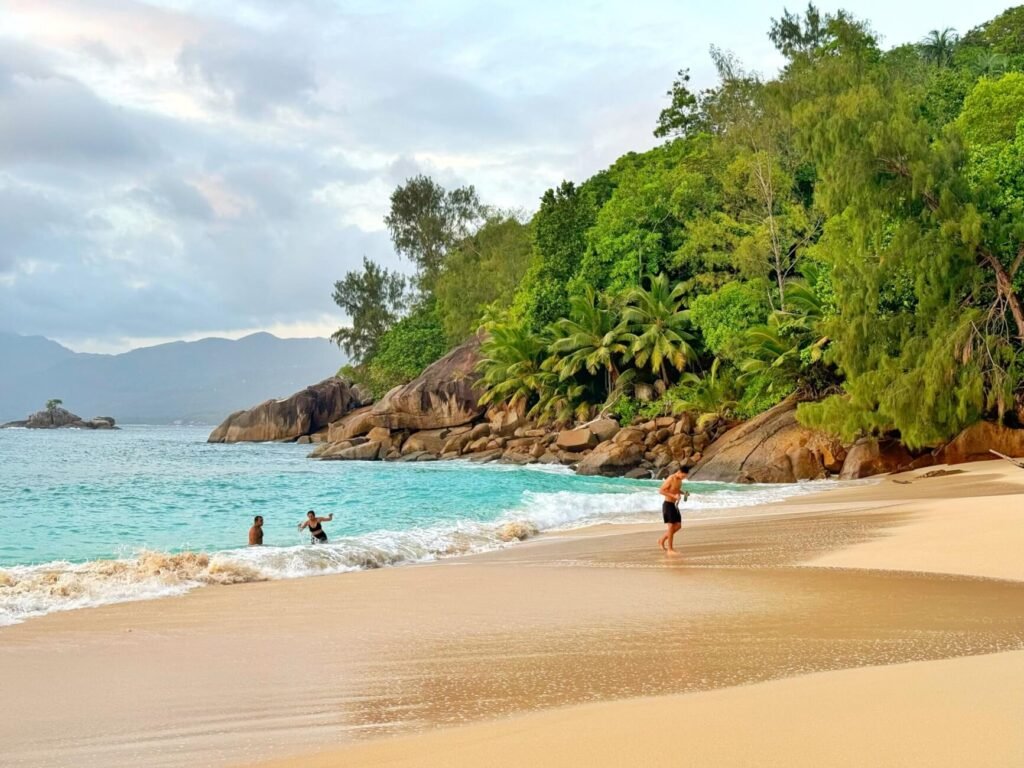
There is one important catch: not every beach is equally comfortable during this period. Southern and southeastern coastlines can experience stronger waves and seaweed washed ashore. The north and west may offer more sheltered alternatives, depending on the day’s conditions.
July and August can also be busy because of international school holidays. If you’re traveling during this period, book accommodation and inter-island transport early, particularly if you want to stay on more than one island.
October and November: Ideal for a Relaxed Island Holiday
October is another excellent month to consider. The southeast trade winds begin to weaken, and the sea often becomes more inviting for swimming and boat trips. The weather can be warm and humid, but calmer conditions make it appealing to travelers who want to spend plenty of time outdoors.
November brings warmer weather as the northwest monsoon approaches. Rain showers become more frequent, yet sunny periods remain possible. The changing conditions can also leave the islands looking lush and green.
These months are especially appealing for couples, honeymooners, and travelers planning a beach-focused trip. You can spend your mornings snorkeling, enjoy a long lunch near the water, and explore local restaurants in the evening without needing to plan every activity around the wind.
If you’re choosing between the two, October is a good starting point for calmer sea conditions, while November can suit travelers who don’t mind occasional tropical showers.
December to March: Warm, Humid, and Greener
December through March is the warmer, wetter part of the year. Humidity rises, and tropical showers can be heavy at times, especially around January and February. Rain doesn’t necessarily last all day, so a visit during this period can still include plenty of sunshine.
The landscape is often lush, making these months attractive for nature lovers and photographers. The warmer weather also suits travelers who want a tropical escape during the northern hemisphere winter.
The main consideration is flexibility. A downpour may interrupt a hike or change your plans for a boat trip, so leave some room in your itinerary rather than scheduling every outdoor activity in advance.
December can be particularly expensive around Christmas and New Year, when demand for island accommodation increases. If you’re traveling during the festive season, compare rates early and check cancellation conditions before paying for your stay.
Best Month to Visit Seychelles for Different Activities
The right month depends on what you plan to do once you arrive.
- Beach holidays: April, October, and November are good options for warm weather and periods of lighter winds.
- Snorkeling and diving: April–May and October–November are useful periods to consider for potentially calmer seas and underwater visibility.
- Hiking: May through September generally offers drier conditions, though trails can still be humid and slippery.
- Sailing and windsurfing: June through September can suit wind-based activities because of the southeast trade winds.
- Wildlife and nature: Seychelles is worth exploring throughout the year, with seasonal conditions influencing birdwatching and other outdoor experiences.
For a more detailed look at seasonal conditions, the Seychelles Meteorological Authority publishes month-by-month climate guidance.
What Is the Cheapest Time to Visit Seychelles?
There isn’t one guaranteed cheapest month because prices depend on accommodation, flight availability, holidays, and how far ahead you book.
April, May, October, and November can be useful months to compare because they sit between the main wind seasons. However, popular resorts may still charge premium rates, and special travel dates can affect prices considerably.
Traveling outside Christmas and New Year can help you avoid one of the more expensive holiday periods. Guesthouses and self-catering apartments may also provide more flexibility than luxury resorts, especially if you’re staying for a week or longer.
If you’re planning to visit Mahé, Praslin, and La Digue, compare the combined cost of ferries, transfers, and accommodation rather than choosing a hotel based on its nightly rate alone. Moving between islands can add a noticeable amount to your total budget.
How Long Should You Stay in Seychelles?
A stay of seven to ten days gives many travelers enough time to experience two or three of the main islands without rushing. You might spend four nights on Mahé, three on Praslin, and two on La Digue, adjusting the split to match your interests.
Mahé is a good base for mountain walks, local markets, and a range of beaches. Praslin offers access to Vallée de Mai and the famous Anse Lazio area, while La Digue is known for its relaxed pace and distinctive granite-framed beaches.
If you’re arranging several transfers, allow some flexibility for changing sea conditions and ferry schedules. A little extra time between activities can make an island holiday much more relaxing.
Travelers who enjoy discovering different destinations can also read our guide to hidden beaches near Saranda for another coastal escape with a different climate and travel style.
What to Pack for Seychelles
Lightweight clothing, comfortable sandals, swimwear, and strong sun protection are useful throughout the year. Bring a hat, sunglasses, and reef-conscious sun protection, especially if you’ll spend long periods on the water.
A light rain jacket is useful during the wetter months, while water shoes can help on rocky shorelines. If you plan to hike, pack proper footwear and carry drinking water.
Don’t rely on the monthly weather pattern alone when deciding what to wear or which excursions to book. Check the forecast before leaving your accommodation, and follow local warnings about waves and currents.
Conclusion
The best time to visit Seychelles is usually April, May, October, or November, when lighter winds can create favorable conditions for beach days, snorkeling, and island hopping. June through September is generally drier and cooler, making it appealing for hiking, while December through March brings warmer, more humid weather and tropical showers.
Seychelles can be enjoyed throughout the year, but your experience will depend on the activities you prioritize and the coastlines you visit. Choose your dates around those preferences, check the local forecast, and leave enough flexibility to enjoy the islands at their own pace.
FAQs
1. What is the best month to visit Seychelles?
April and October are excellent choices for travelers seeking warm weather and periods of lighter winds. May and November are also good options, depending on your activities and preferred conditions.
2. Is Seychelles worth visiting during the rainy season?
Yes. Rain showers can be heavy, but they often alternate with sunny periods. The islands remain warm, and the lush scenery can be especially beautiful. Flexible plans are helpful during wetter months.
3. Which months are best for swimming in Seychelles?
April, May, October, and November often offer favorable conditions for swimming and snorkeling because winds may be lighter. Always check local sea conditions, as currents and waves can vary by beach and day.
