

Planning a 10-day trip to Thailand is easier when you know how much money to set aside before leaving home. From Bangkok’s busy markets to Phuket’s beaches and Chiang Mai’s temples, your expenses will depend on where you go, where you stay, and how you prefer to travel.
- How Much Money Do You Need for 10 Days in Thailand?
- 1. Accommodation Costs for 10 Days
- 2. Food and Drinks
- 3. Transportation Around Thailand
- 4. Activities, Attractions, and Tours
- 5. How Much Cash Should You Bring to Thailand?
- 6. Extra Expenses People Often Forget
- Sample 10-Day Thailand Budget
- Tips to Make Your Thailand Budget Go Further
- Conclusion
- FAQs
So, how much money to bring to Thailand for 10 days? For one person, a reasonable starting budget is around ฿10,000–฿20,000 for a budget-conscious trip, ฿25,000–฿60,000 for a mid-range holiday, and ฿65,000 or more for a more comfortable trip. These estimates cover typical expenses inside Thailand, not international flights.
Your actual spending can be lower or higher depending on hotel prices, domestic flights, island transfers, shopping, and paid activities. Here is how to plan your money without bringing more cash than you need.
How Much Money Do You Need for 10 Days in Thailand?
Your travel style makes the biggest difference to your total. Backpackers can save money by staying in hostels, eating local food, and using public transport. Travelers who prefer private hotel rooms, restaurant meals, and organized excursions will need a larger budget.
The following estimates are for one person travelling for 10 days, excluding international flights, travel insurance, and major shopping purchases.
| Travel style | Estimated daily budget | Estimated 10-day budget |
| Budget | ฿1,000–฿2,000 | ฿10,000–฿20,000 |
| Mid-range | ฿2,500–฿6,000 | ฿25,000–฿60,000 |
| Comfortable or luxury | ฿6,500+ | ฿65,000+ |
These are planning ranges rather than fixed prices. A beach resort in Phuket or Koh Samui can cost considerably more than a simple guesthouse in Chiang Mai. For another way to compare accommodation, food, transport, and activity costs, Budget Your Trip’s Thailand cost guide provides traveler-reported spending estimates.
1. Accommodation Costs for 10 Days
Accommodation is often one of the largest expenses on a Thailand trip. Your total will depend on whether you choose hostel dorms, budget hotels, or higher-end resorts.
Here are approximate nightly planning ranges:
- Hostel dorm: ฿250–฿700
- Budget guesthouse or hotel: ฿600–฿1,500
- Mid-range hotel: ฿1,500–฿4,000
- Upscale hotel or resort: ฿4,000–฿10,000 or more
For nine nights, a budget traveler might spend around ฿2,250–฿13,500 on a hostel or basic room, while a mid-range traveler could spend ฿13,500–฿36,000. The final amount depends on the property, location, and travel dates.
If you are visiting during a busy holiday period, book accommodation early and compare the total price after taxes and fees. Staying slightly outside the busiest tourist areas can also reduce costs, provided transport remains convenient.
2. Food and Drinks
Thailand is a great destination for travelers who enjoy trying local food without spending a fortune. Street stalls, food courts, and neighborhood restaurants often provide affordable meals, while international restaurants and hotel dining can increase your daily spending.
A practical daily food budget might look like this:
- Budget meals: ฿200–฿400
- A mix of local food and restaurants: ฿400–฿900
- Upscale dining and drinks: ฿1,000 or more
Over 10 days, this works out to approximately ฿2,000–฿4,000 for budget meals or ฿4,000–฿9,000 for a mix of casual dining and restaurants.
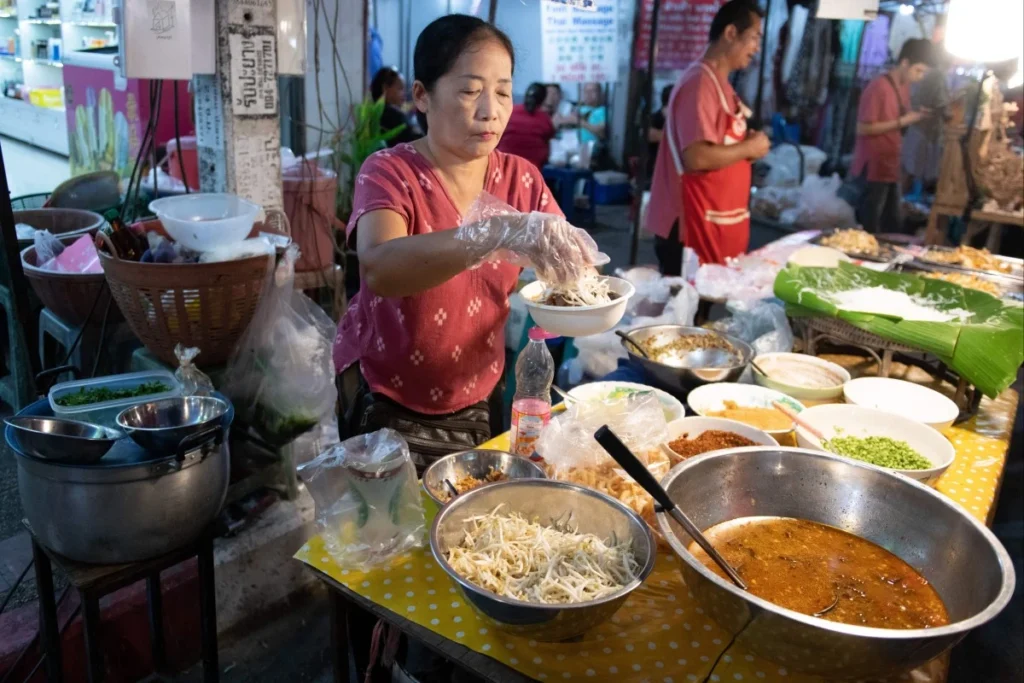
Markets are particularly useful when you want to try several Thai dishes without committing to an expensive meal. Popular tourist areas can have higher prices, so check menus before ordering and keep drinks and snacks in your daily calculation.
3. Transportation Around Thailand
Your transport budget depends on whether you stay in one city or visit several destinations. Local buses, trains, and Bangkok’s rail network can keep costs manageable, while domestic flights, taxis, ferries, and private transfers add up quickly.
For 10 days, consider these approximate allowances:
- Local transport: ฿1,000–฿2,000
- Regular taxis and ride-hailing: ฿2,000–฿5,000
- Intercity journeys, ferries, or domestic flights: ฿2,000–฿8,000 or more
These amounts are planning estimates, not guaranteed fares. Traveling between Bangkok, Chiang Mai, Krabi, and the islands will generally cost more than spending most of your trip in one area.
In Bangkok, public transport can be a convenient way to reach major attractions without paying for a taxi every time. If your itinerary includes islands, remember to budget separately for ferries and transfers between the pier and your hotel.
4. Activities, Attractions, and Tours
Thailand offers plenty of inexpensive things to do, including exploring markets, walking through historic neighborhoods, and visiting public beaches. However, entrance fees and guided activities should still be included in your budget.
Some experiences you might want to pay for include:
- Temple visits and cultural attractions
- Boat trips and island excursions
- National parks and waterfalls
- Cooking classes
- Snorkeling or diving trips
- Traditional Thai massages
A useful starting allowance is ฿1,000–฿3,000 for a budget-friendly selection of activities over 10 days. If you plan several island tours, guided excursions, or diving experiences, consider setting aside ฿5,000–฿10,000 or more.
For example, if Bangkok is part of your itinerary, check the admission details for the Grand Palace before visiting. Adding the entrance fee to your budget in advance makes it easier to decide which attractions matter most to you.
5. How Much Cash Should You Bring to Thailand?
Your total travel budget and the amount of physical cash you carry are two different things. You do not need to carry your entire 10-day budget in banknotes if you have a reliable debit or credit card and can withdraw cash when needed.
For a trip that includes hotels and larger purchases paid by card, carrying around ฿3,000–฿6,000 in cash at a time can be a practical starting point. Adjust this amount to suit your plans, particularly if you expect to visit markets, smaller food stalls, or places where cards may not be accepted.
Keep some smaller notes for everyday purchases and local transport. Store backup cash separately from your main wallet, and avoid carrying all your money in one place.
It is also worth checking your bank’s foreign transaction charges and the ATM fee before travelling. Some Thai ATMs charge a fee for foreign cards, and your own bank may apply an additional withdrawal or currency conversion fee.
If you prefer keeping your travel cash and cards organized, our guide to best travel wallets can help you choose an option for carrying your essentials.
6. Extra Expenses People Often Forget
Even a well-planned budget can fall short when small expenses are left out. Before deciding how much money to bring to Thailand for 10 days, allow some room for the following:
- SIM card or mobile data: Choose a plan based on your trip length and data needs.
- Travel insurance: Compare policies and check what activities they cover.
- Laundry: Useful if you are travelling with a small suitcase.
- Souvenirs and shopping: Set a limit before visiting markets and shopping centers.
- Airport transfers: Include transport to and from your accommodation.
- Unexpected expenses: Keep an emergency reserve for delays or changes to your plans.
For mobile connectivity, compare tourist SIM and eSIM options before departure. The official AIS website lists tourist mobile options that you can review when planning your data needs.
If you expect to use your phone for maps, transport bookings, and travel reservations, our guide to the best eSIM for international travel may also help you compare connectivity options.
Sample 10-Day Thailand Budget
Here is an example of how a mid-range traveler could divide a ฿40,000 budget for 10 days inside Thailand.
| Expense | Example budget |
| Accommodation | ฿16,000 |
| Food and drinks | ฿7,000 |
| Local and intercity transport | ฿5,000 |
| Attractions and tours | ฿6,000 |
| SIM, laundry, and miscellaneous costs | ฿2,000 |
| Emergency reserve | ฿4,000 |
| Total | ฿40,000 |
This is an example, not a quote for a particular itinerary. It assumes a mix of comfortable accommodation, local meals, transport, and paid activities. If you choose expensive resorts or multiple domestic flights, you will need to increase the budget.
International flights, visas if applicable, and travel insurance should be planned separately.
Tips to Make Your Thailand Budget Go Further
You do not need to cut out every activity to save money in Thailand. A few practical choices can make your money last longer.
- Choose your destinations carefully: Staying in fewer places can reduce transport costs.
- Eat local food regularly: Markets and casual Thai restaurants can offer good value.
- Book rooms early: Compare cancellation terms and the full price before paying.
- Use public transport where practical: It can be cheaper than relying on taxis for every journey.
- Check tour inclusions: Confirm whether meals, transfers, and entrance fees are included.
- Keep an emergency buffer: Avoid spending your entire budget during the first few days.
- Compare payment options: Check your bank’s foreign transaction charges and the exchange rate before withdrawing cash.
A simple itinerary with a few well-chosen destinations often provides a better experience than trying to visit every popular place in one trip.
Conclusion
So, how much money should you bring to Thailand for 10 days? A budget-conscious traveler can start with around ฿10,000–฿20,000, while a mid-range holiday may require ฿25,000–฿60,000 per person. For luxury accommodation, private transfers, and frequent tours, plan for at least ฿65,000 and adjust according to your preferences.
Remember that the amount you spend in Thailand is not necessarily the amount of cash you need to carry. Keep a manageable amount of cash for everyday purchases, use payment cards where convenient, and maintain an emergency reserve. With accommodation, food, transport, and activities planned in advance, you can enjoy Thailand without constantly worrying about money.
FAQs
1. Is ฿20,000 enough for 10 days in Thailand?
It can be enough for a budget-conscious trip if you choose affordable accommodation, eat local food, use economical transport, and limit expensive tours. It may not cover international flights, insurance, major shopping, or a luxury island holiday.
2. Should I take cash or a card to Thailand?
A combination of both is usually practical. Cash is useful for markets, small food stalls, and some local services, while cards can be convenient for hotels and larger businesses. Check your bank’s fees and keep backup payment options available.
3. How much money should a couple bring for 10 days in Thailand?
For two people sharing a room, a budget-conscious couple might plan around ฿20,000–฿40,000, while a mid-range couple could budget approximately ฿50,000–฿120,000. These estimates exclude international flights and depend on accommodation, destinations, and activities.
